from 0 review
8 Days 7 Nights
Daily Tour
Unlimited
English
Timed around the vibrant Thimphu Tshechu, this journey combines Bhutan’s most celebrated capital-city festival with visits to some of western Bhutan’s finest dzongs, valleys and monasteries, from the fortress town of Punakha to the iconic Tiger’s Nest and the remote Haa Valley.
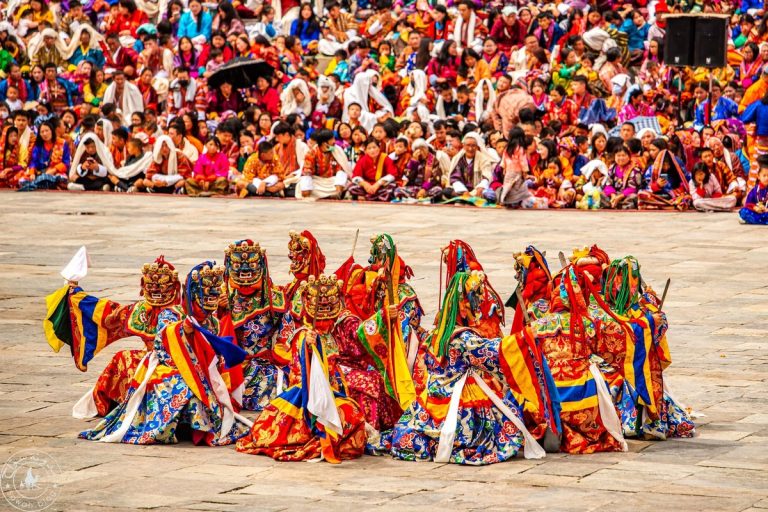
The Thimphu Tshechu is one of the largest and most popular festivals in the country, drawing thousands of visitors and locals alike to Tashichho Dzong to witness colourful mask dances, ancient rituals and the lively antics of the Atsaras.
Fly into Paro by Drukair or Bhutan Airlines. After completing your immigration formalities, you will be received by our representative, who will be your tour guide throughout the trip. Then drive to Thimphu. On arrival, check into your hotel and, after refreshment, visit the following: Kuensel Phodrang, home to the tallest Buddha statue in the country, with a full view of Thimphu valley below. Craft Bazaar: a one-stop place to witness Bhutanese culture and buy Bhutan-made arts and crafts. The bazaar's 80 stalls cover all aspects of traditional Bhutanese craftsmanship, with artisans from across the country displaying and selling their handicrafts. Also visit other handicraft stores in town. Overnight at the hotel in Thimphu.
Today is a festival day, so after breakfast we will head to Tashichho Dzong to witness the Thimphu Tshechu, one of the biggest festivals in the country. It is held in the capital over three days, beginning on the tenth day of the eighth month of the lunar calendar, and draws thousands of people, many travelling from neighbouring dzongkhags (districts) to attend the festivities. The Tshechu itself is preceded by days and nights of prayer and ritual to invoke the deities. When it was first held by the fourth Desi, Gyalse Tenzin Rabgye, in 1867, it consisted of only a few dances performed strictly by monks, including the Zhana Chham and the Zhana Nga Chham (Dances of the 21 Black Hats), Durdag (Dance of the Lords of the Cremation Ground), and the Tungam Chham (Dance of the Terrifying Deities). The Thimphu Tshechu changed in the 1950s, when the third King, Jigme Dorji Wangchuck, introduced numerous boed chhams (mask dances performed by lay monks), adding colour and variety to the festival without compromising its spiritual significance. Mask dances such as the Guru Tshengye (Eight Manifestations of Guru Rinpoche) and Shaw Shachi (Dance of the Stags) are especially enjoyed for their theatrical quality. Equally important are the Atsaras, who are far more than mere clowns: believed to be dupthobs (accomplished practitioners), their antics and jesting are thought to keep evil forces at bay during the Tshechu, and modern Atsaras also use short skits to spread health and social awareness messages. For local farmers, the Tshechu is also a welcome break from farm life, an occasion to celebrate, receive blessings and pray for health and happiness. Later, after lunch, we will visit the Weekend Market: every Saturday and Sunday, much of Thimphu's population and many valley dwellers gather on the banks of the river for the weekend market, an interesting place to mingle with local people. We will also visit a venue for the National Sport of Bhutan, archery, one of the best places to see a game of traditional and modern archery, with a tournament being played almost every day. Overnight at the hotel in Thimphu.
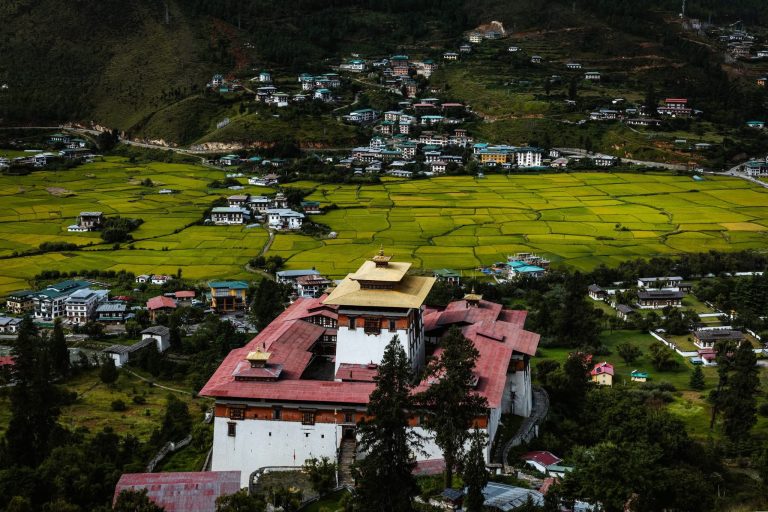
After breakfast, travel to Punakha over Dochula Pass (3,140m). On a clear day, you can enjoy a panoramic view of the Himalayan mountain ranges. Pass by the beautiful 108 chortens built on the hill by Her Majesty Ashi Dorji Wangmo Wangchuck (Queen Mother of Bhutan) for the security and wellbeing of His Majesty, the King of Bhutan. You will also visit Druk Wangyal Lhakhang, a monastery built by Ashi Dorji Wangmo Wangchuck (the Queen Mother of Bhutan) as a tribute to His Majesty the Fourth King, Jigme Singye Wangchuck, and the armed forces, after His Majesty led a successful operation against Indian militants who had occupied certain areas of Bhutan. The gallery of the Druk Wangyal Lhakhang has beautiful murals depicting important events in the reigns of the Kings of Bhutan. Continue on to Punakha. Punakha has been inextricably linked to some of the most momentous events in Bhutanese history and deserves its reputation as one of the most beautiful and significant regions at the heart of Bhutanese culture; it served as the capital of Bhutan from 1637 until 1907, and its dzong is historically important, standing as a symbol of a unified Bhutan. On the way, stop for lunch at Metsina village, then visit Chhimi Lhakhang, the Divine Madman's Monastery, famous for its fertility shrine, where visitors can receive a special fertility blessing. Continue on to Punakha Dzong, located at the confluence of the Pho Chhu (father river) and the Mo Chhu (mother river). The dzong was built in 1637 by Zhabdrung Ngawang Namgyal to serve as the religious and administrative seat of the region, and it showcases some of the finest woodwork in the country. In the evening, visit Rinchengang and Lobesa villages for a short walk and a chance to interact with the locals. Overnight at the hotel in Punakha.
After breakfast, enjoy a short hike and local sightseeing. Khamsum Yulley Namgyal Chorten Hike: a beautiful hike takes you to the regal Khamsum Yuelley Namgyal Chorten, built to remove negative forces and promote peace, stability and harmony in the changing world. The chorten dominates the upper Punakha Valley, with commanding views across the Mo Chhu and towards the mountainous peaks of Gasa and beyond. After lunch, visit Limbukha: drive towards Limbukha village, then walk across the suspension bridge (about 200m long) through a fresh breeze and with a fascinating view of the dzong. Follow the farmhouses gradually climbing towards the Dompala hills; the view of the dzong, the Pho Chhu and Mo Chhu rivers, and the surrounding villages is superb amidst chir pine forests. The climb is another two and a half hours to Limbukha. Limbukha farmers grow Bhutan's famous red rice, which is said to have medicinal value; this particular rice needs clean mountain spring water so that its taste and nutritional value are maintained. Limbukha is also known for its love of peace and tranquility. Legend has it that during medieval wars, the 'limpus', or people of Limbukha, always volunteered as peace negotiators. This is also depicted during the yearly festival called 'Serda', when the men carry peace flags instead of swords and fireworks. Overnight at the hotel in Punakha.
After breakfast, travel to Paro. On the way, visit the following: Tamchog Lhakhang Bridge: located across the river on the Thimphu–Paro highway, about a 30-minute drive from Paro towards Thimphu, Tamchog Lhakhang sits across the Paro River and is reached by an iron chain suspension bridge. The lhakhang and the bridge were built by the 13th-century Tibetan saint Thangthong Gyalpo, who was also a blacksmith and an architect. Of the many iron chain bridges he built, only a few remain in use today, and crossing this old bridge can be a thrilling experience. Some of the original iron chain links used to build it are on display at the National Museum in Paro. Paro Airport Bird's-Eye View: Paro International Airport is the only international airport in Bhutan, with a single runway and very little international air traffic; it is considered one of the more challenging airports in the world to land at, but also one of the most beautiful in terms of landscape and architecture. Check into your hotel and later visit the National Museum, housed in the Ta Dzong (watchtower), where an intriguing collection of artifacts provides a wonderful introduction to the rich culture and heritage of the Kingdom. In the evening, stroll through Paro town and visit local handicraft stores. Overnight at the hotel in Paro.
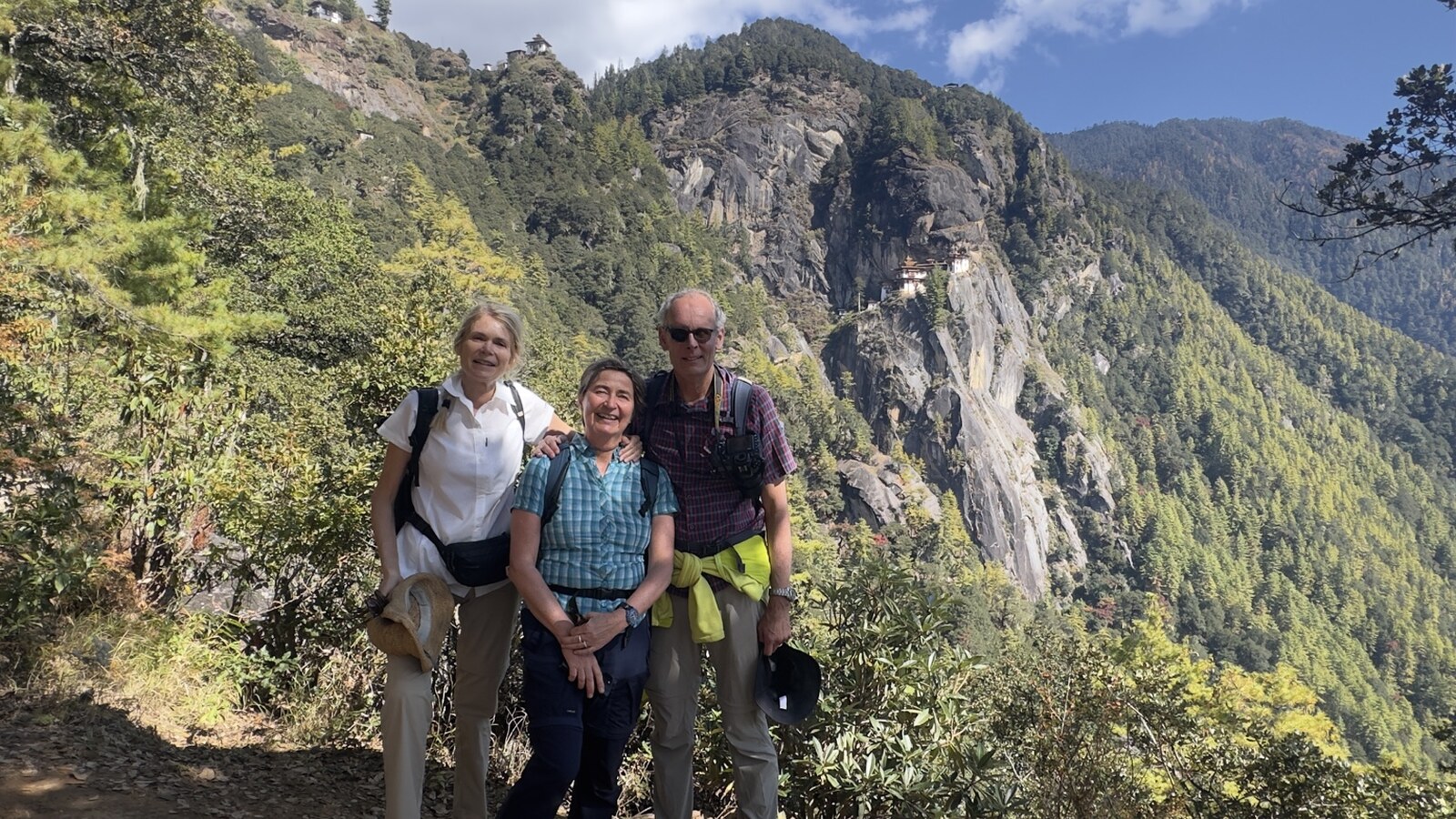
After breakfast, hike up to Taktsang Monastery, also known as 'Tiger's Nest'. The walk up to the viewpoint will take about 1 to 1.5 hours depending on your fitness, and from there you will enjoy a spectacular view of the monastery clinging to the side of the cliff. Stop for refreshments at the viewpoint cafeteria, then walk further up to the monastery, which takes about another hour. It is said that in the 8th century, Guru Rinpoche flew on the back of a tigress from eastern Bhutan to this place and meditated in a cave here for 3 months. The principal lhakhang of the present monastic complex dates from 1692. Taktsang was severely damaged by fire in 1998 but has since been fully restored to its former glory. After visiting the monastery, walk back downhill towards the road, stopping for lunch at the viewpoint cafeteria on the way, then continue down to the road point. From here, drive to Drukgyel Dzong, a fortress on a ridge in the upper Paro valley, about a 30-minute drive north of Paro town. Drukgyel Dzong means 'Fortress of the Victorious Drukpas' and was built in 1649 by Zhabdrung Ngawang Namgyal. It served as an important base for defense in the region until 1951, when it was destroyed by fire; its ruins continue to be protected as an important monument linking the people of Bhutan with the events that helped maintain the country's sovereignty. Drukgyel Dzong served solely a defensive purpose, without administrative or religious functions, guarding against external threats from the border. The existing ruins are comparatively well preserved, and visitors can still make out the features of the complex without much difficulty. While most of the timber components, such as the roof trusses, door and window frames, floors and ceilings, are almost entirely gone, the majority of the stone and rammed-earth wall structures still stand, helping visitors understand the ideas and practices of defense in earlier times. Reconstruction of the fortress began in April 2016, on the command of His Majesty the King, to mark the 400th anniversary of Zhabdrung Ngawang Namgyal's arrival in Bhutan in 1616. Overnight at the hotel in Paro.
After breakfast, start the day early with a drive to Haa via Chele La pass. About 4km from Bondey village, the road to Haa diverts to the right and begins its ascent towards the pass. After driving through blue pine and rhododendron forest for 45km, you reach Chele La pass (4,200m). From here, you can enjoy superb views of Mt. Chomolhari and Jichu Drake, and it's a lovely place to walk around for a few minutes and take in the views. Continue on to Haa, descending for another 22km (under an hour's drive). Haa Dzong is presently occupied by the military, but the view from outside is stunning. After lunch, visit the famous monastery of Lhakhang Karpo (White Temple), followed by Lhakhang Nagpo (Black Temple); the central shrine in Lhakhang Nagpo is said to be identical to that of the Jowo in Lhasa, Tibet. The construction of Lhakhang Karpo is believed to have been assisted by the local community, which is how the area came to be known as 'Hay', meaning 'surprise', later becoming 'Haa' through differences in pronunciation over time. The three prominent hills overlooking Haa valley, once called 'Me Rig Puen Sum', are today known as 'Rig Sum Goenpa', representing three deities: Jambayang, Chana Dorji and Chenrezig. Later, other Buddhist saints, including Guru Rinpoche, are said to have blessed the locality. The principal religion followed here is Drukpa Kagyu, and after the arrival of Zhabdrung Ngawang Namgyal, Ap Chundu became Haa's chief guardian deity. In the evening, drive back to Paro the same way, a journey of under 3 hours. Overnight at the hotel in Paro.
After breakfast, transfer to Paro International Airport for your onward departure.
1.1. Yes, all visitors will need a visa to visit Bhutan, except for visitors from India, who will require a permit. 1.2. Nationals of Bangladesh and the Maldives shall be eligible for a visa on arrival at the port of entry. 1.3. Nationals of Switzerland and Thailand holding diplomatic and official passports shall be eligible for a visa on arrival at the port of entry. 1.4. Visitors from India will need a permit to visit Bhutan. This applies to anyone holding an Indian passport, or an Indian voter ID card. For Indian nationals aged under 18 years, a passport or a birth certificate will suffice, and they must be accompanied by legal guardians.
2.1. Visitors can process a visa or permit online from the website of the Department of Immigration. Visitors can also engage tourism service providers (see www.bhutan.travel for more details) to process the travel documents and plan a trip. The Tourism Council of Bhutan (TCB) will also offer customer service to help answer questions regarding visa applications and to answer questions about travel within the country. 2.2. Although visitors from Bangladesh and Maldives can process visas on arrival and visitors from India can process permits on arrival at the port of entry, it is recommended that these be applied online to reduce wait time and for faster clearance at the port of entry.
3.1. A passport copy is required. The passport must be valid for six months from the intended date of departure from the Kingdom; 3.2. Travel insurance valid for the duration of the trip; and 3.3. A recent passport size photograph.
4.1. The visa fee is USD 40 per person and it is non-refundable. While the process to issue the visa is usually quick, the visa can take up to five working days to process.
5.1. Visitors from India can use a passport or voter ID card. Children under 18 years of age can use a birth certificate or passport, and must be accompanied by a legal guardian. 5.2. Passport size photograph is also required. 5.3. Travel insurance is required and should be valid for the whole duration of the trip.
Please Visit Tourism Council of Bhutan



Leave a review